
A new Gemshorn Celeste 8'
Blacksburg Presbyterian project · October 2026
New pipework will be added to the organ, and I have finished pre-voicing on the Gemshorn Celeste 8'. The stop starts from Tenor C, one octave above the low C, and has 49 pipes. I took the physical dimensions — diameters, mouth widths and shape — from the existing Swell Gemshorn 8' and designed the stop to complement it tonally. Its function is to provide an additional tonal color in the Swell. The stop is tuned slightly sharp, out of tune so to speak, and gives an undulating sound in combination with the SW Gemshorn 8'.
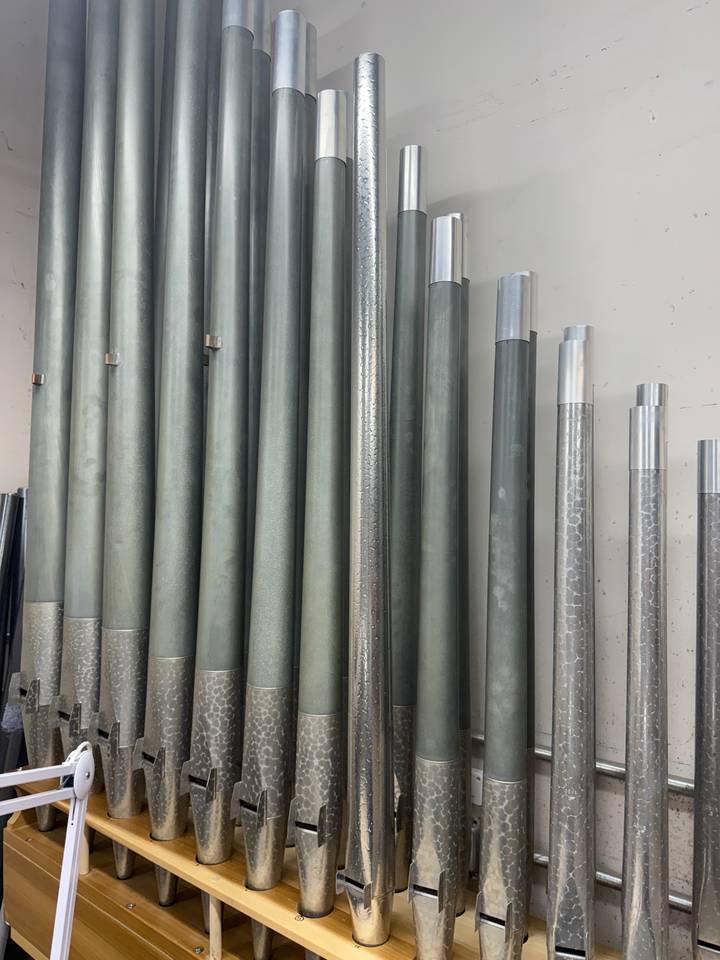
Swell Gemshorn 8' pipes with one of the new Celeste pipes in the middle
When I receive pipes from the pipe maker they are still unvoiced. The cutups have been precut to my instructions, the pipes are over length, and the toe holes are roughly the size needed.
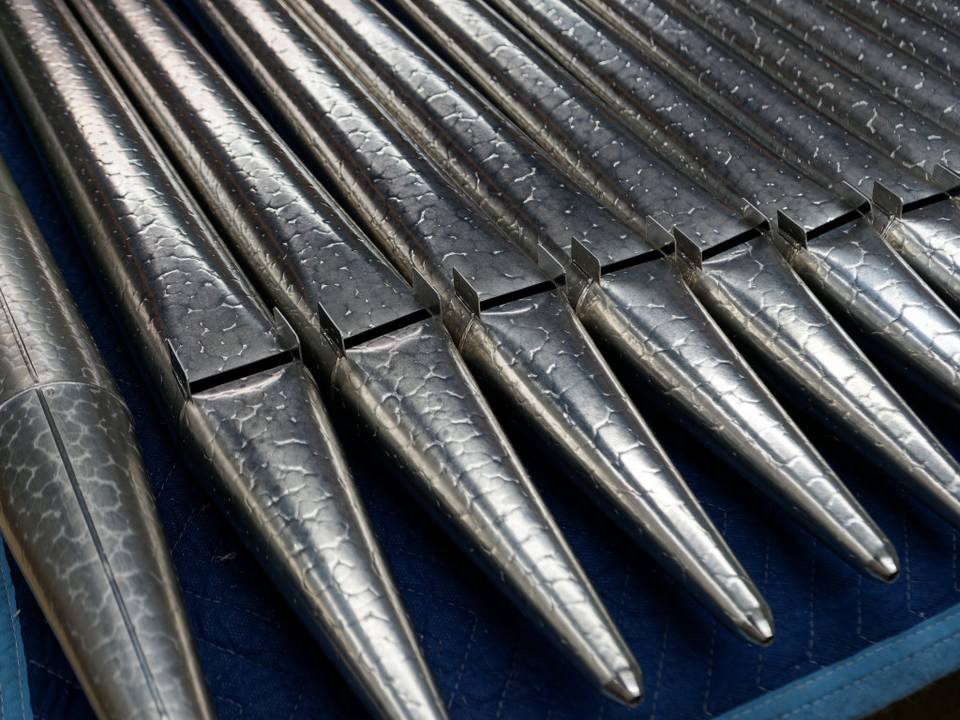
Celeste pipes fresh from the pipemaker
Several steps are needed to prepare the pipes for the voicing chest. I start with sample pipes of the Cs to get an idea of the cutup and lengths needed, the cutup being the most important thing for the harmonic development of the tone. Low cutups have a high harmonic content, as appropriate for string-type pipes like the GT Dulciane 8'. High cutups are used for flutes like the Great Bourdon 16'. Medium-high cutups are appropriate for Principals and Mixtures.
To transfer the correct cutup heights I use a chart where I mark the height of the Cs and read the pipes in between off the vertical lines. Once marked, I cut up the pipes and apply to the languids the same nicking used in the Gemshorn. This suppresses the wind noise of the attack and reduces the chiffing that is audible as the pipe speaks.
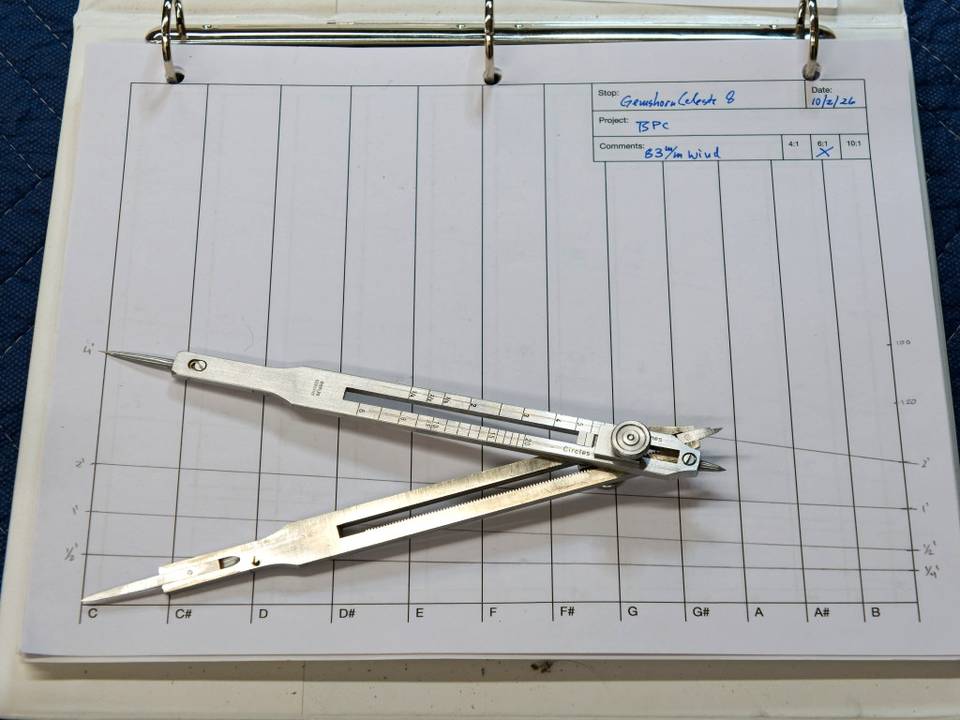
Cutup chart for proportional dividers
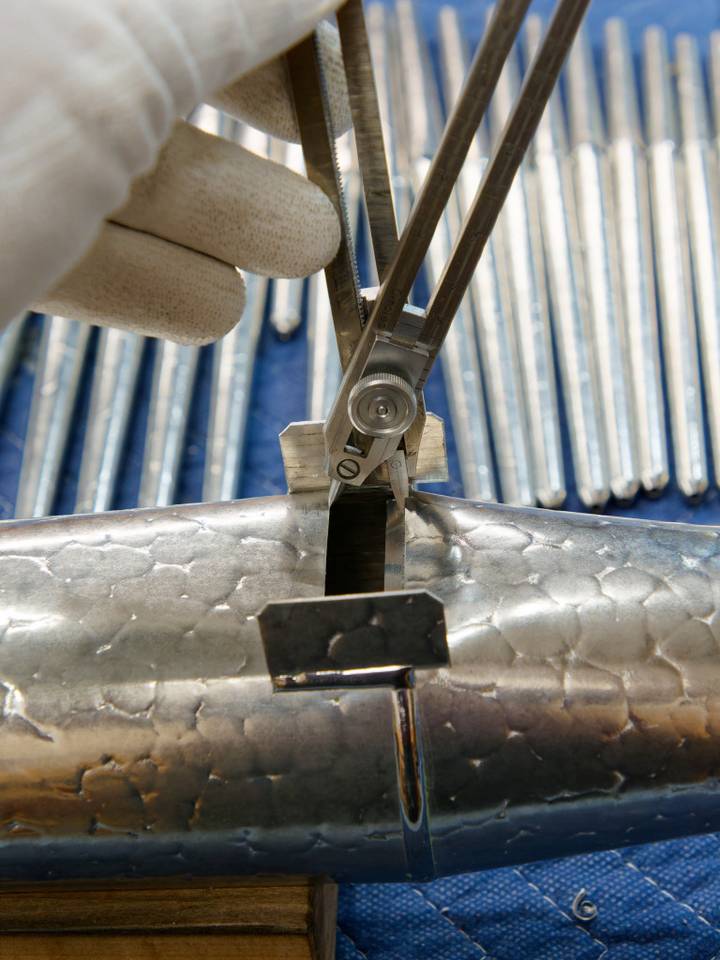
Marking cutup on the mouth of a pipe
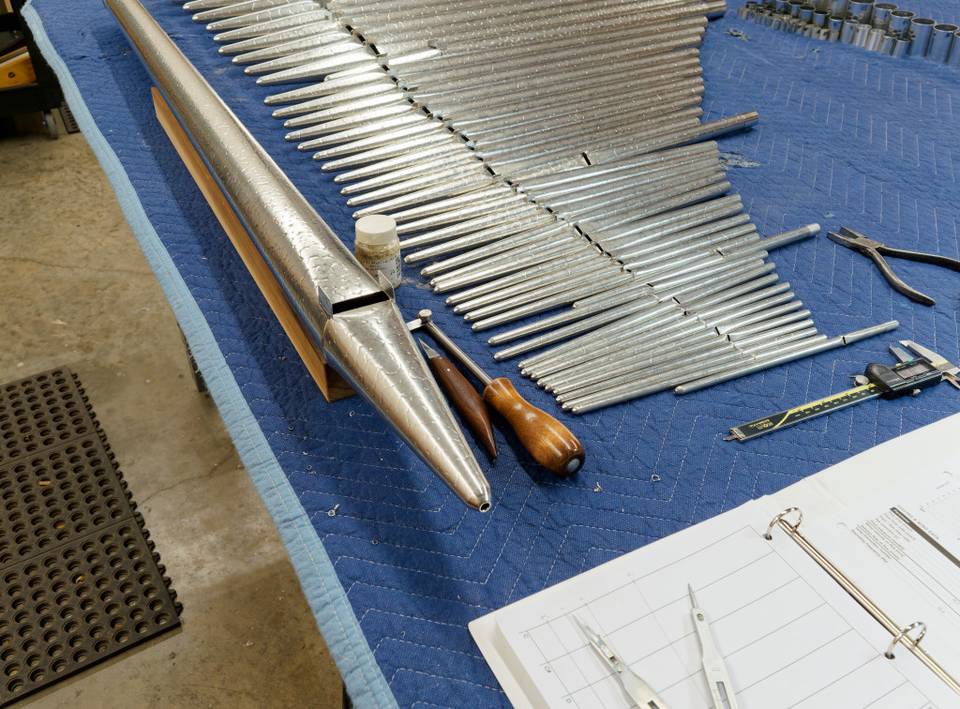
In the process of cutting up the upper lips
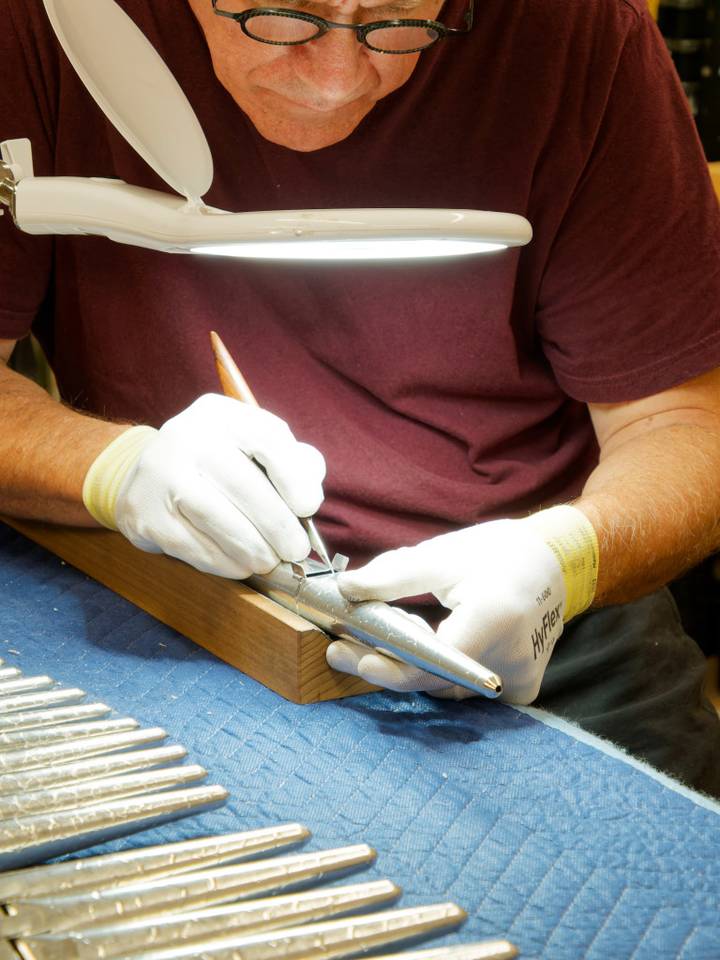
Applying nicks to languids
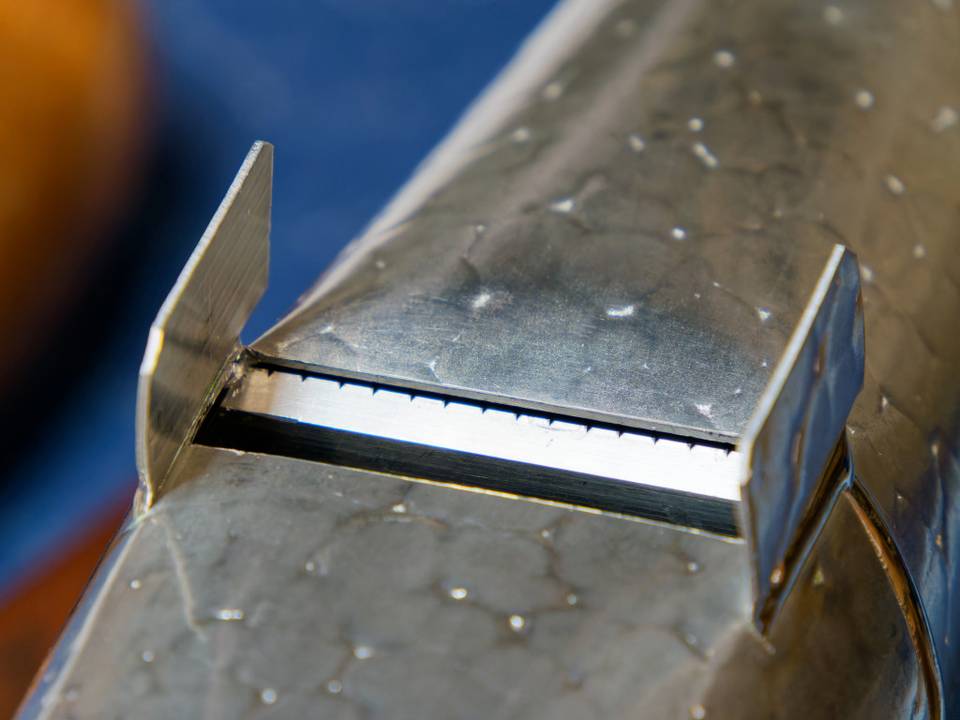
Mouth of a pipe with nicked languid and cutup showing
Once the toeholes are sized in diameter, the attack is roughly adjusted and the lengths are cut, the pipes are ready to go on the voicing chest.
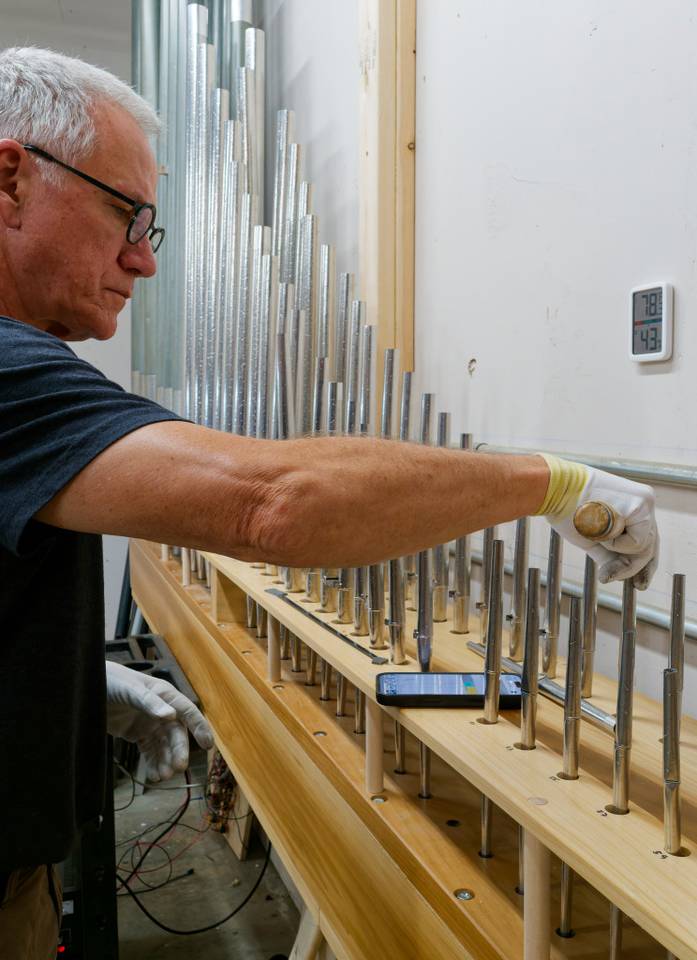
Roughly cutting pipes to length for final regulation onsite
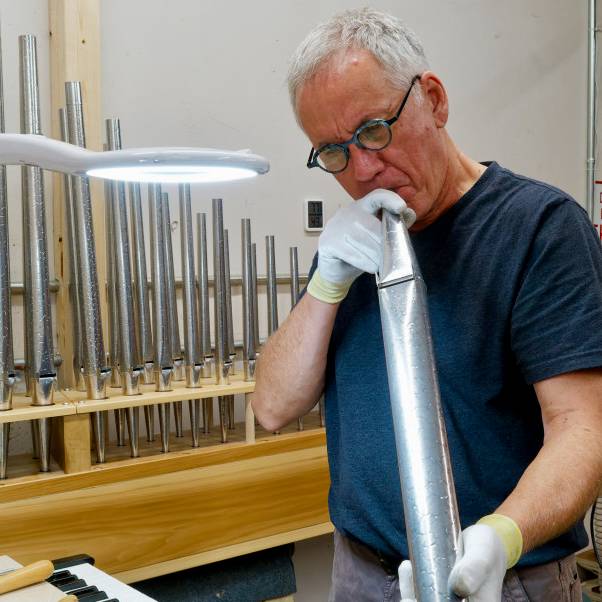
Checking the attack or speech of a pipe
The pipework was purchased from J. F. Organpipes in Avidos, Portugal. The owner, Mr. Fitzau, is of German descent and relocated to Portugal in the late 80s or early 90s. Incidentally, when I worked as a voicing assistant for Emil Hammer Orgelbau near Hannover, Germany, I met Mr. Fitzau when he delivered organ pipes to our shop in his VW Kombi, fitted out with shelving so the pipes could travel safely from Lake Constance. His company makes flue pipes and works with many of the prominent European builders. The pipes I received are still of the good quality I remembered from years ago.
I didn't make any sound samples of the Celeste, but below are three of the Gemshorn 8'. The first is the Lutheran hymn "Vom Himmel Hoch", which I have used for a few of the previous stops. The second is a nice little piece by Johann Sebastian Bach, the chorale prelude "Kyrie, Gott Vater in Ewigkeit" (BWV 672). Last is a very fast piece by Rimsky-Korsakov, "The Flight of the Bumblebee". It works well on this stop, as the Gemshorn is very agile. Enjoy…
Vom Himmel Hoch on the SW Gemshorn 8'
Kyrie, Gott Vater in Ewigkeit (BWV 672) on the SW Gemshorn 8'
The Flight of the Bumblebee on the SW Gemshorn 8'